 Admin
Admin
Erome: What It Is, How It Works, and Whether It’s Safe to Use
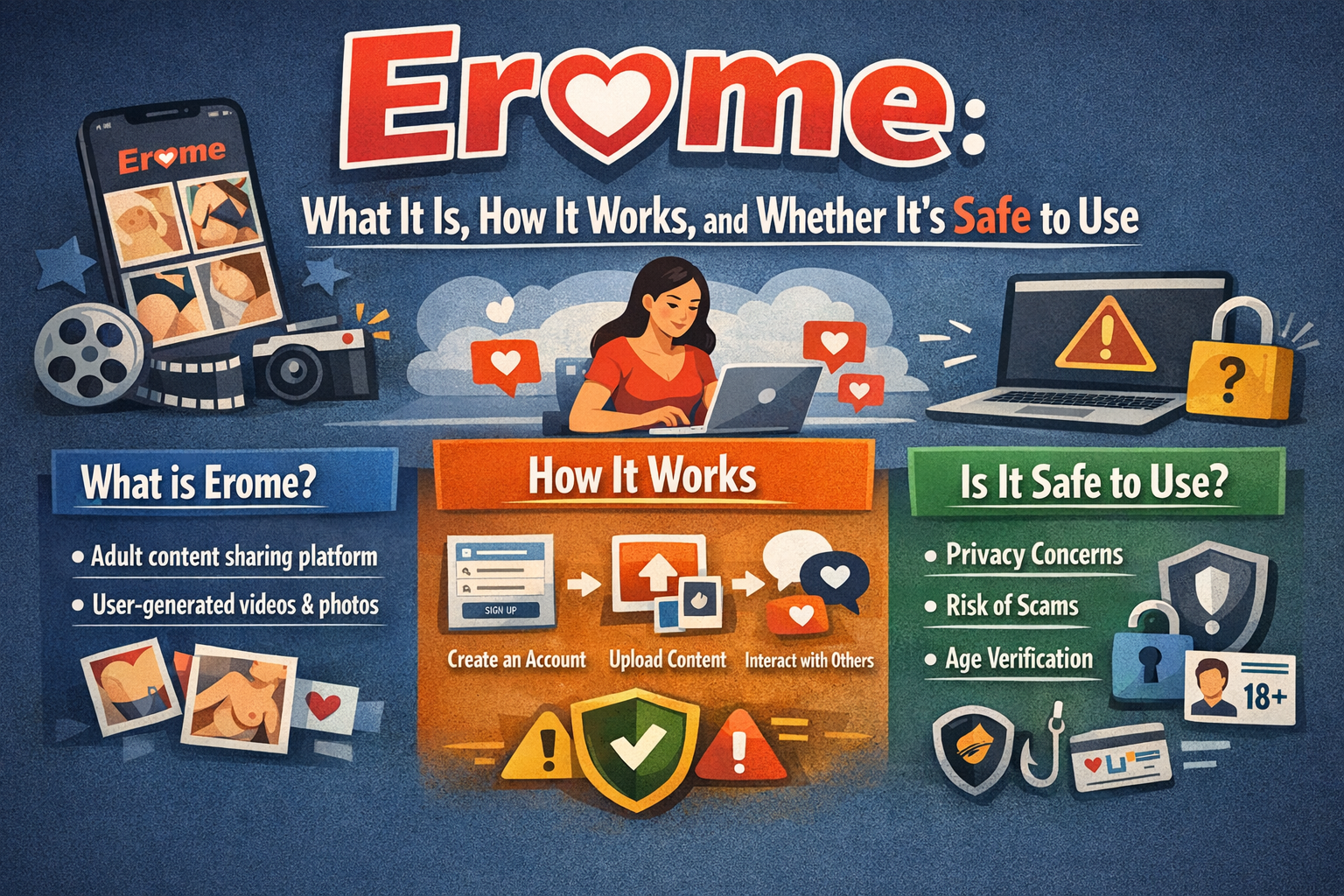
If you have been seeing the word erome show up in search results and wondering what the platform actually is, you are not alone. A lot of people search Erome for the same few reasons. Some want a basic explanation. Some are trying to understand how Erome albums and profile pages work. Others are focused on privacy, account settings, login issues, or the bigger question people keep asking online: is erome safe?
The reason this keyword gets so much attention is pretty simple. Erome is not just another random site people land on once and forget. It sits in that space where users want clear answers about how uploads work, what private albums really mean, how account privacy works, and whether the platform feels legit enough to use. On top of that, common searches like erome login, erome not working, erome upload not allowed, and is erome legit keep showing up because people are often looking for help just as much as they are looking for information.
This guide breaks it down in plain language. It covers what Erome is, how the platform works from a user’s side, how Erome privacy settings and content controls actually work, and why questions around safety, moderation, direct URLs, creator verification, and access problems come up so often.
What Is Erome?
At the simplest level, Erome is a photo and video sharing platform built around albums, profile pages, and user-controlled sharing. If you search what is erome, the plain answer is that it is a hosting and media sharing site where users can upload photos and videos, organize them into albums, and decide how public or private they want that content to be.
That basic description matters because people often overcomplicate the keyword. Erome is not hard to understand once you strip away the noise. It is a content sharing platform with an account system, album system, profile page, privacy options, and creator features. That is why so many related searches cluster around terms like erome platform, erome website, erome site, erome album platform, erome profile, and erome profile page.
What makes the platform stand out is the way it combines simple uploading with visibility controls. A user can create an account, upload media, group that media into albums, and then manage how that content appears. That is where terms like private album, private account, hidden profile, saved albums, and creator verification start to matter.
When people search erome meaning, erome explained, or erome guide, they are usually trying to answer one of three things:
what the platform does
how content is shared and viewed
whether the privacy and safety side is strong enough for their comfort level
That is also why Erome attracts both beginners and returning users. One group wants a first-time explanation. Another group already knows the site and is searching specific issues like erome login issue, erome search not working, or erome account forced private.
How Erome Works From a User’s Side
Once you understand the basic idea, the next question is how does erome work in practice. From a user’s side, the flow is pretty straightforward. You create an account, sign in, upload photos or videos, arrange them into albums, and decide how visible you want that content to be.
Accounts, profiles, and sign-in options
Like most modern platforms, Erome starts with account access. Users looking for erome register, erome create account, or erome sign in are usually just trying to get through the front door. The platform supports several sign-in methods, which is why keyword variations like erome email login, erome google login, erome reddit login, and erome twitter login come up so often.
After sign-in, the account side becomes more important. Your account is tied to your profile page, settings, privacy options, album visibility, and general account controls. That is why so many searches combine the brand name with intent words like erome account settings, erome username, erome profile url, erome access account, and erome delete account.
For many users, the profile page is where the platform starts to feel more like a real creator or sharing space instead of a one-off upload tool. Your profile acts as the main place where albums, followers, following counts, and visibility settings connect together.
Albums, uploads, file limits, and sharing
Erome revolves around albums more than anything else. That is one of the biggest points to understand if you are reading an erome for beginners type of article. Instead of treating every upload as a separate disconnected post, the platform leans heavily on album-based sharing.
That is why terms like erome upload, erome upload photos, erome upload videos, erome share albums, erome album sharing, and erome album link are so central to the keyword field. The album is where content lives, gets shared, gets viewed, and gets managed.
The upload side is fairly simple in concept:
users can upload photos and videos
media is grouped into albums
albums can be shared with others
the platform has file and album limits
content can later be edited, hidden, or deleted
That matters for SEO because people do not just search “Erome.” They search things like erome file size limit, erome album limit, erome 2gb file limit, and erome 100 items per album because they want to know whether the site fits how they plan to use it.
There is also an important difference between using Erome as a sharing site and thinking of it like personal storage. A lot of user confusion starts there. The platform is built for content hosting and media sharing, but it is not positioned as private cloud backup. That distinction explains why some upload-related complaints show up in discussions later.
Public, private, and hidden visibility settings
This is one of the biggest reasons the keyword erome privacy gets so much attention. Many people assume privacy settings are simpler than they really are. In reality, Erome’s visibility controls sit across different levels.
A public album is meant to be visible and shareable in the normal way. A private album gives more control and reduces visibility. A private account takes that a step further by reducing the visibility of the whole profile and its albums. Users also search phrases like erome hidden album, erome hidden profile, erome profile privacy, erome no search engine indexing, and how to hide erome profile because they want to understand these layers.
This is where many users get tripped up. “Private” on a platform does not always mean invisible in every possible situation. It usually means less discoverable, less searchable, or hidden from broader browsing surfaces. That is why erome private album and erome private account are important phrases, but so is erome direct url. A direct link changes the privacy conversation, and that is a big reason trust and caution come up again and again in Erome discussions.
Why Erome Gets So Much Search Interest
The keyword erome gets attention for more than one reason. It is not only about curiosity. It is also about friction. That is why the search behavior around this platform looks so broad.
One group of people is just trying to understand the platform. They search erome overview, erome features, erome review, or how to use erome. Another group is trying to fix something. They search erome not working, erome down, erome cannot login, erome google login not working, or erome upload not allowed.
Creator use versus casual browsing
Search interest also grows because different users approach Erome in very different ways. Some use it mainly as a creator platform. Others use it more casually for browsing public albums or saving albums for later viewing. That split explains why the keyword map includes both creator terms and user-side browsing terms.
On the creator side, you see phrases like erome creator, erome studio, erome verified creator, erome creator profile, erome creator verification, and erome creator settings. On the more casual user side, you see phrases like erome saved albums, erome save album, erome explore, album views, and profile page.
The platform also creates natural curiosity because it sits somewhere between a gallery site, a user generated content space, and a creator profile system. That overlap helps explain why people compare it with other platforms and search terms like erome alternatives, sites like erome, and erome competitors.
Why safety, login, and access issues come up so often
A big part of Erome search demand comes from uncertainty. People do not only want to know what the site is. They want to know whether they can trust it, whether the platform is stable, and why certain problems keep happening.
That is why search phrases like is erome safe, is erome legit, erome trust, erome scam concerns, erome login error, erome media not loading, erome buffering, and erome loading error are so common. A keyword gets stronger in Google when it sits at the center of repeated questions, and Erome clearly does.
Is Erome Safe to Use?
This is probably the biggest question around the platform. When people search is erome safe to use, they are not usually asking one tiny technical question. They are asking about the whole experience: privacy, security, moderation, account control, content visibility, and whether the site behaves like a real platform with actual policies behind it.
The balanced answer is that Erome appears to be a real functioning platform with structured account settings, privacy controls, creator verification options, DMCA and abuse reporting, and account deletion features. At the same time, that does not remove the normal risks that come with any user-upload site.
What the platform gets right on privacy and control
One reason people search is erome secure or erome account security is because privacy is baked into how the platform presents itself. Users can manage albums, choose privacy settings, hide parts of their profile presence, and decide how open or closed they want their account to be.
That gives Erome more visible control options than many simpler upload sites. Keywords like erome privacy settings, erome private account, erome private album, erome account private, and erome profile privacy exist for a reason. Users are not guessing that privacy is part of the product. It is directly tied to how the platform works.
There is also a more formal side to the trust question. Erome has clear rules around abuse reporting, DMCA complaints, moderation, creator verification, warnings, and account deletion. Those things matter because they show the platform is not just a blank upload page with no structure behind it.
Where users should still be careful
At the same time, safe does not mean risk-free. That is the part people should not ignore. User-upload platforms always carry some level of exposure, especially when you are dealing with content sharing, direct links, and profile visibility.
That is why terms like erome direct url, erome content removal, erome report abuse, erome dmca complaint, and erome user safety matter so much. Even when privacy settings exist, people still need to think carefully about what they upload, how they share it, and who might end up with access to it.
A good rule of thumb is simple: if you would not be comfortable with a piece of content being harder to control later, do not upload it casually. That advice applies to almost every media-sharing site, and it definitely applies here.
Is Erome legit or just risky?
The search is erome legit is slightly different from is erome safe. “Legit” usually means: is this a real platform with real policies and recognizable account systems, or is it something sketchy that should be avoided outright?
From that angle, Erome looks like a real platform rather than a fake shell. It has a homepage, sign-in methods, a visible FAQ, terms and privacy language, DMCA and abuse procedures, and a creator page with verification and promotion rules. That gives it more structure than many low-trust sites users run into online.
But legit and risk-free are not the same thing. The platform still falls into the broader category of user-upload media sites, and that always means users should move with some caution. So the honest answer is this: it appears legitimate as a functioning platform, but users still need to be thoughtful about privacy, sharing, and what they choose to upload.
Erome Privacy, Rules, and Content Control
A lot of the platform’s reputation comes down to this section, even if users do not think of it that way. Privacy, moderation, abuse handling, and account rules shape how comfortable people feel using a site over time.
Private albums, private accounts, and direct access
The difference between private album and private account is one of the most important things to understand. A private album is about the visibility of a specific album. A private account affects the wider profile and how albums appear across the site.
That is why keywords like how to make erome private, how to hide erome profile, erome hidden albums, erome hidden profile, and erome no search engine indexing keep showing up. Users want control, but they also want to understand the limits of that control.
The detail many people miss is that privacy settings reduce visibility, but they do not magically erase every path to access. That is where album url, profile url, and direct link become part of the conversation. If you are thinking about Erome privacy, you have to think beyond just the toggle in settings.
Warnings, moderation, abuse reports, and DMCA
The rules side of the platform is another major part of the trust picture. Searches like erome rules, erome moderation, erome spam policy, erome warning, erome abuse report, and erome dmca are all tied to the same thing: people want to know how the platform handles bad behavior, policy problems, and content disputes.
For users, the important idea is that Erome is not presenting itself as an unmoderated free-for-all. It has rules, a warning structure, and processes for abuse and takedown issues. That can affect account access, content visibility, and whether an account stays active.
The moderation side also helps explain some of the search demand around:
erome warning issue
erome account suspension
erome account deleted
erome permanent deletion
erome unlawful material
erome report misuse
That does not mean every complaint online is caused by moderation, but it does show why users pay attention to policy language.
Deleting content and deleting an account
Content control is not only about uploading. It is also about what happens when a user wants something gone. That is why searches like how to delete erome albums, erome delete albums, erome remove files, erome profile deletion, and how to delete erome account matter.
A platform feels very different when it gives users clear control over removal. On Erome, that part of the experience matters because the keyword field is packed with people asking about deletion, removed content, warning-related restrictions, and account-level changes.
The Most Common Problems People Run Into on Erome
A big share of Erome-related search traffic is problem-driven. That is very normal for platforms with active users and lots of moving parts.
Site maintenance and feed problems
When users search is erome down or erome down, they are often reacting to short-term problems rather than a full disappearance of the platform. Sometimes it is a feed issue. Sometimes pages load strangely. Sometimes content seems to vanish temporarily. Sometimes browsing breaks before the rest of the site does.
That is why phrases like erome not working, erome loading error, erome buffering, and erome media not loading keep appearing. Even if the platform is still live, the user experience can feel broken enough to trigger panic searches.
Login glitches, upload errors, and search visibility
Login and upload complaints are another major part of the keyword landscape. Users often search erome cannot login, erome sign up issue, erome google login not working, erome login issue, and erome upload not allowed because these are the kinds of problems that stop everything else.
There is also the visibility side. A user may upload something and then feel confused because it does not appear where expected. That leads to searches like erome search not working, erome profile hidden, erome hidden profile, or erome access issue. In many cases, users are really trying to figure out whether the problem is a technical error, a privacy setting, or a moderation-related restriction.
Forced-private accounts and moderation confusion
One of the more frustrating experiences for users is when their account visibility changes and they do not fully understand why. That is where terms like erome account forced private, erome warning, erome warning issue, and erome shadow ban start circulating in user discussions.
Sometimes the issue is a misunderstanding of site rules. Sometimes it is content category related. Sometimes users assume the site is broken when the real cause is a privacy or moderation setting. Whatever the cause, this is one of the reasons Erome gets searched so heavily through a troubleshooting lens rather than only a discovery lens.
Other Common Questions People Ask About Erome
Is Erome down?
Sometimes it might feel that way, especially when the feed stops loading, albums do not open properly, or login behaves strangely. In most cases, though, this question comes from short-term site issues, maintenance windows, or user-specific access problems rather than the platform disappearing entirely. That is why is erome down, erome down, and erome not working tend to spike when something feels off.
How to save Erome videos
A lot of people search how to save erome videos, but that question usually mixes two different ideas together. One is saving an album inside the platform for future viewing. The other is downloading content to a device. Those are not the same thing. The platform’s own saved albums feature works more like bookmarking public content so you can come back to it later. If someone is thinking about saving anything beyond that, the right approach is to stick to content they own or have permission to keep.
What happened to Erome?
Usually, when people ask what happened to erome, they are reacting to a change in experience rather than a single dramatic event. It could be site instability, upload restrictions, login trouble, moderation changes, private account issues, or a visibility problem that makes content harder to find. In other words, this search phrase often reflects confusion, not one fixed answer.
Can you make money on Erome?
This is a smart question because it gets asked a lot in creator circles. The short answer is that Erome is not mainly positioned as a direct payout platform for uploads. Instead, its creator side appears more focused on visibility and promotion. That is why keywords like erome creator, erome studio, erome verified creator, erome bio link, erome fan site link, erome paysite link, and erome sales from bio link are part of the platform’s search ecosystem. For creators, Erome can be a traffic and exposure tool, but it is not usually framed as a native earnings engine in the way people might assume.